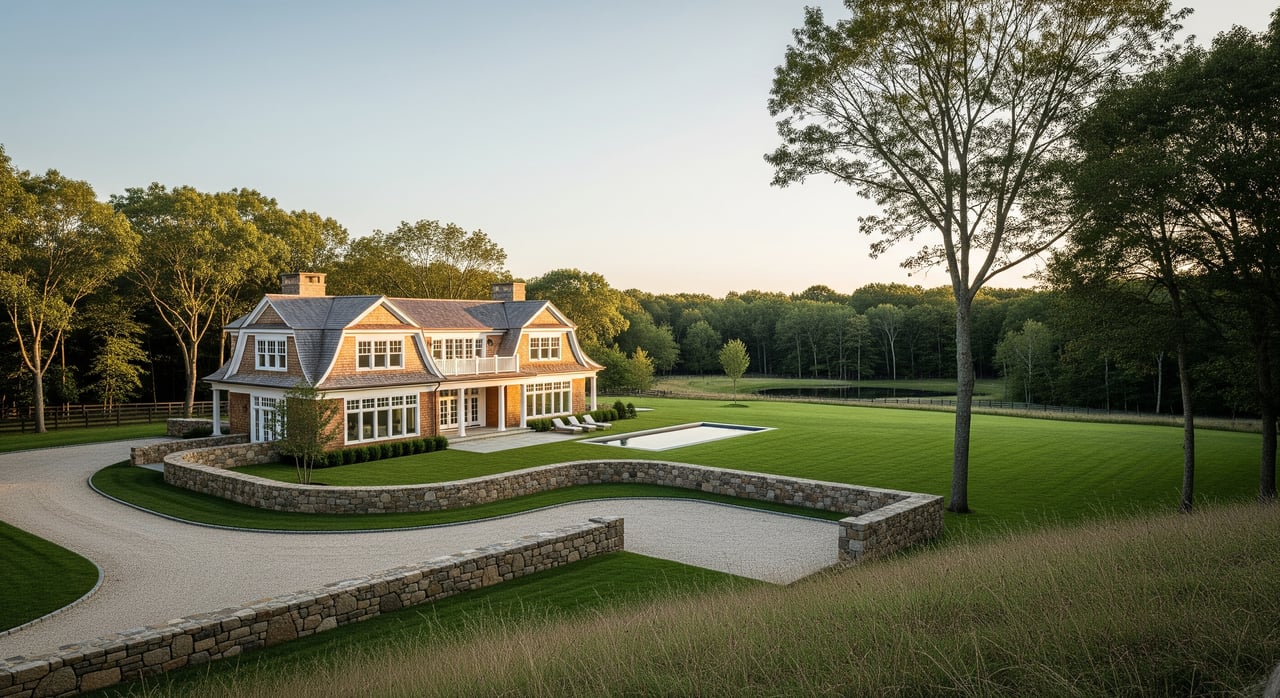
Backcountry Greenwich: A Guide to 4-Acre Zoning
January 1, 2026
January 1, 2026
Craving more privacy, trees, and breathing room in Greenwich’s backcountry? If you are considering acreage in 06830, you will hear a lot about 4-acre zoning. Understanding what that means will shape how you plan a home, evaluate value, and prepare for approvals. This guide breaks it down clearly so you can move forward with confidence. Let’s dive in.
In backcountry Greenwich, “4-acre zoning” means the minimum lot area for a single-family home is four acres. One acre equals 43,560 square feet, so four acres equals 174,240 square feet. At that size, density is about 0.25 homes per acre, which is very low.
Beyond lot size, other standards matter. Minimum frontage, front and side setbacks, maximum lot coverage, and height limits all shape what you can build. Many large lots also carry extra layers like wetlands buffers, conservation easements, slope restrictions, and septic setbacks. The result is more space between homes and a distinct estate character across backcountry neighborhoods.
Only part of a 4-acre parcel is usually ideal for a house. Setbacks, wetlands, steep slopes, ledge, and septic or well locations can shrink the usable building area. A topographic survey helps you see the true envelope early. Plan for flexibility in siting to balance privacy, light, and access.
Long driveways are common, and curb-cut and sight-distance rules apply. If you share a private road, you may need a maintenance agreement. Many parcels rely on private wells and on-site septic. Extending municipal water, sewer, or natural gas can be costly or not feasible in some backcountry locations.
Even on large lots, significant hardscape can trigger stormwater management requirements. Proper grading and drainage protect wetlands and neighboring properties. Orientation matters too. You will likely site a home to preserve tree buffers, maximize privacy, capture sun, and frame views.
Low-density zoning means fewer parcels overall, and large-lot owners tend to hold longer. Many estate properties cannot be easily subdivided because of rules or recorded restrictions. That leads to fewer listings and fewer comparable sales when you try to price or appraise a property.
On 4-acre parcels, value depends more on acreage quality than simple per-square-foot metrics. Key drivers include usable buildable area, privacy and tree cover, proximity to commuter routes and town centers, the quality of improvements, utility setup, road access, and topography or views. The buyer pool is selective, and preferences drive outcomes.
Days on market are often longer than in-town listings because the buyer pool is smaller. Relocators seeking space, local buyers prioritizing privacy, and estate investors each evaluate tradeoffs differently. Specialized lenders and appraisers are helpful, especially for properties with extensive acreage, multiple structures, or pending septic work. Vacant land loans are typically harder than mortgages on improved properties.
4-acre zoning does not automatically allow you to split land. Subdivision depends on meeting minimum lot size and frontage, proving feasible building envelopes on each new lot, securing curb cuts, and satisfying stormwater rules. Wetlands, slopes, ledge, and recorded restrictions often make subdivision impractical. If it is a goal, start with a preliminary review with Planning and Zoning and the Engineering team.
Large-lot zoning rewards careful planning. When you understand how 4-acre rules interact with wetlands, septic, and site features, you protect your privacy goals and your budget. With clear due diligence and tailored marketing, acreage in 06830 can deliver long-term value and a true estate feel.
If you are weighing a purchase, preparing to sell, or exploring subdivision feasibility, let’s talk about your options and the right next steps. Connect with Brid Mortamais for a private consultation and a clear path forward.
Stay up to date on the latest real estate trends.


Brid is a full-time agent with a deep understanding of the local market and provides exceptional service for each of her clients whether they are renting, buying, or selling. She handles every aspect of each real estate transaction, guaranteeing her buyers and sellers the highest level of honesty, attention, and discretion.