In Old Greenwich, You Can Buy the House and Still Not Buy the Beach
September 10, 2026
September 10, 2026
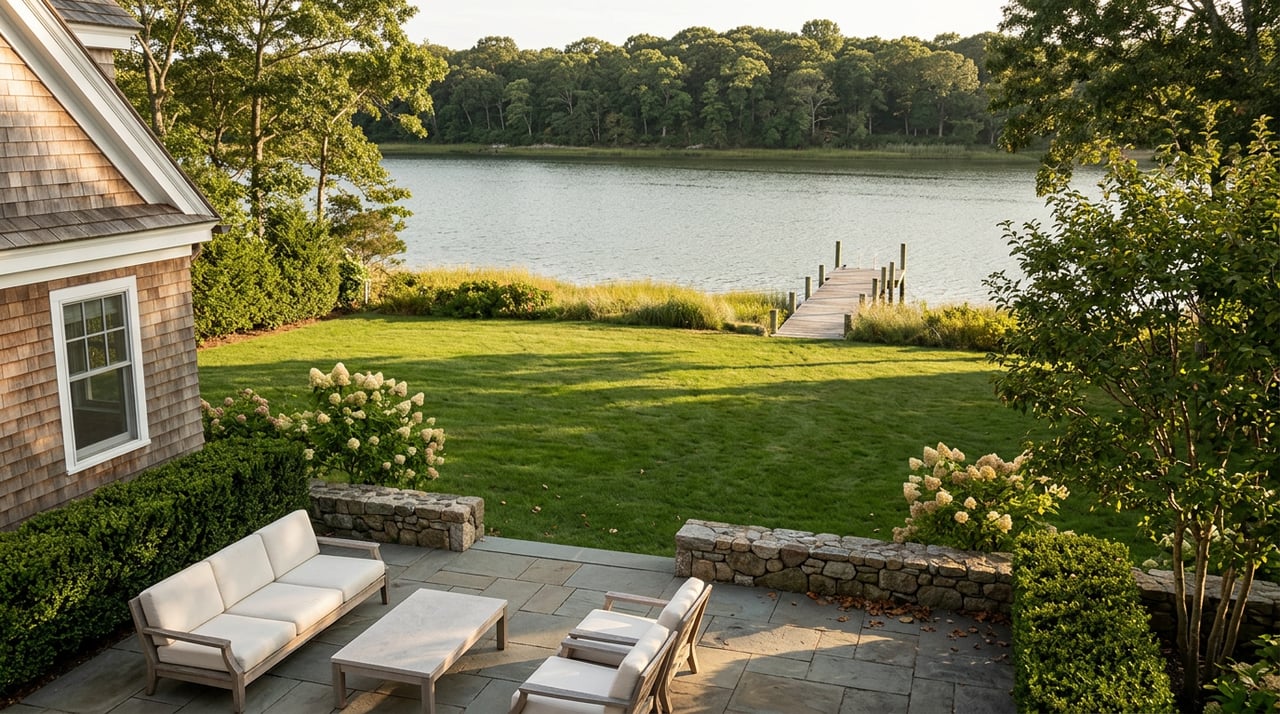
A listing sheet for a cottage off Tod's Driftway says "beach rights included." A buyer coming from outside Greenwich reads that the way most people read amenity language: pool included, garage included, beach included. It sounds like a feature of the house. It isn't. In Old Greenwich, a meaningful share of what gets marketed as waterfront lifestyle is actually a separate legal membership in a private association, one with its own initiation fee, its own annual dues, and its own rules about who gets a mooring and who waits. The house closes on one timeline. The association membership works on another. Missing that distinction is the single most common surprise for buyers moving into this pocket of town.
Old Greenwich has three legacy waterfront associations that show up again and again in listing language, and each one predates modern HOA structures by decades.
Shorelands sits on Greenwich Cove just south of the village center. The land was originally a golf course before it became a residential association in the 1930s, which explains why the street names still read like a scorecard: Old Clubhouse, Fairgreen. It covers roughly 70 homes, and membership brings a private association beach, a dock with slips for boats up to 18 feet, storage racks for kayaks and paddleboards, and a swim float. The Shorelands Association still runs on volunteer governance, with dues and initiation fees funding road maintenance, dock repairs, and landscaping.
Lucas Point is smaller and older in its formal structure. Built up around 1900 as a summer colony of cottages on land that developer Edwin J. Lucas literally created using rock and fill barged in from New York's early subway excavation, it was formally incorporated in Connecticut on July 30, 1942. Today the Lucas Point Association has only 11 true waterfront homes among its members, with membership providing a private beach, boatyard, and dock.
Shorehame is the third name that turns up on listings for lots along Shorehame Club Road, where membership includes sandy beach access, a boat launch ramp for paddleboards and kayaks, and a shared waterfront lawn. Its membership size isn't publicly disclosed the way Shorelands and Lucas Point's are, but the pattern is the same: deeded access, private governance, dues that live outside the sale price.
| Association | Approximate size | Formed | What membership includes |
|---|---|---|---|
| Shorelands | About 70 homes | Residential association since the 1930s, on a former golf course | Private beach, dock with slips for boats up to 18 feet, kayak and paddleboard racks, swim float |
| Lucas Point | 11 waterfront homes | Incorporated July 30, 1942 | Private beach, boatyard, dock |
| Shorehame | Not publicly listed | Long-established private association | Sandy beach access, boat launch ramp, communal waterfront lawn |
Association dues are modest compared to the home prices around them, but they're real and they're separate. One recent Greenwich Cove-area listing spelled out a one-time association initiation fee of $2,000 and annual dues of $1,400 going forward, plus a flood insurance premium of $2,179 tied to that specific property. None of those figures appear in the closing price. None of them show up when a portal quotes a median sale price for the neighborhood. They arrive later, in paperwork a buyer's attorney should be reading line by line, not in the listing photos.
This matters because Old Greenwich's published price statistics treat every sale as the same product. A house with deeded beach and dock rights through Lucas Point and a house three streets away with no association affiliation at all can carry similar square footage and a similar list price, yet one comes with a private beach and a boat slip and the other doesn't. The median blends them together. The buyer standing in front of either one is not comparing like to like, even when the numbers on the listing sheet look close.
Old Greenwich isn't just expensive right now. It's fast in a way that outpaces even a Greenwich market that is itself accelerating.
Across the broader town, single-family closings in Q1 2026 rose 18 percent year over year to 92, with average days on market falling 31 percent to 75. That's already a market moving quickly. Old Greenwich moved faster still. As of January 2026, homes there were selling in an average of 30 days, down from 105 days the same month a year earlier, with only 8 homes sold that month, up from 3 the year before. The median sale price stood at $4.2 million, up 6.6 percent year over year. Looking at full-year 2025 figures, a separate countywide competitiveness comparison places Old Greenwich alongside Cos Cob as the two fastest-moving submarkets in Greenwich, both averaging under 40 days on market with sale-to-list ratios above 103 percent, meaning buyers are routinely paying over asking just to win.
Part of that speed is ordinary market heat. But part of it is mechanical, and this is where the association math matters. When the pool of homes carrying deeded water access is capped at 11 in one association and around 70 in another, ordinary turnover logic breaks down. These aren't inventory categories that respond to a builder adding supply. A Lucas Point waterfront home doesn't get built more of when demand rises. It changes hands rarely, and when it does, everyone who wants what that membership includes is competing for one of a genuinely small number of chances. That scarcity doesn't show up as a line item in any market report. It shows up as compressed days on market and bids that clear asking price, which is exactly the pattern Old Greenwich is producing right now.
If a listing in Old Greenwich mentions beach rights, association membership, or deeded water access, the sale price is only part of what you're evaluating. Before making an offer, it's worth getting clear answers on a short list of questions that don't always come up in a first showing:
None of these questions are unusual to ask. They're simply easy to skip when a listing photo shows a private beach and the price already feels like the headline number.
Old Greenwich's market data tells a true story. Homes are moving fast, prices are up, and inventory is tight enough that well-positioned sellers have real leverage. What that data doesn't tell you is which of those homes come with a second, smaller transaction sitting inside the first one. Buying into Shorelands, Lucas Point, or Shorehame means buying into a private association's governance, its dues structure, and its own limited inventory of water access, all running on a separate track from the deed itself. The house is the number everyone quotes. The association is the number that decides whether that house actually gives you what you came to Old Greenwich for.
If you're weighing a home in Old Greenwich and want a clearer read on what's actually included before you write an offer, Brid Mortamais can walk through the association details, the dues history, and the real trade-offs property by property. Let's connect and schedule a personalized consultation.
Stay up to date on the latest real estate trends.
Brid is a full-time agent with a deep understanding of the local market and provides exceptional service for each of her clients whether they are renting, buying, or selling. She handles every aspect of each real estate transaction, guaranteeing her buyers and sellers the highest level of honesty, attention, and discretion.