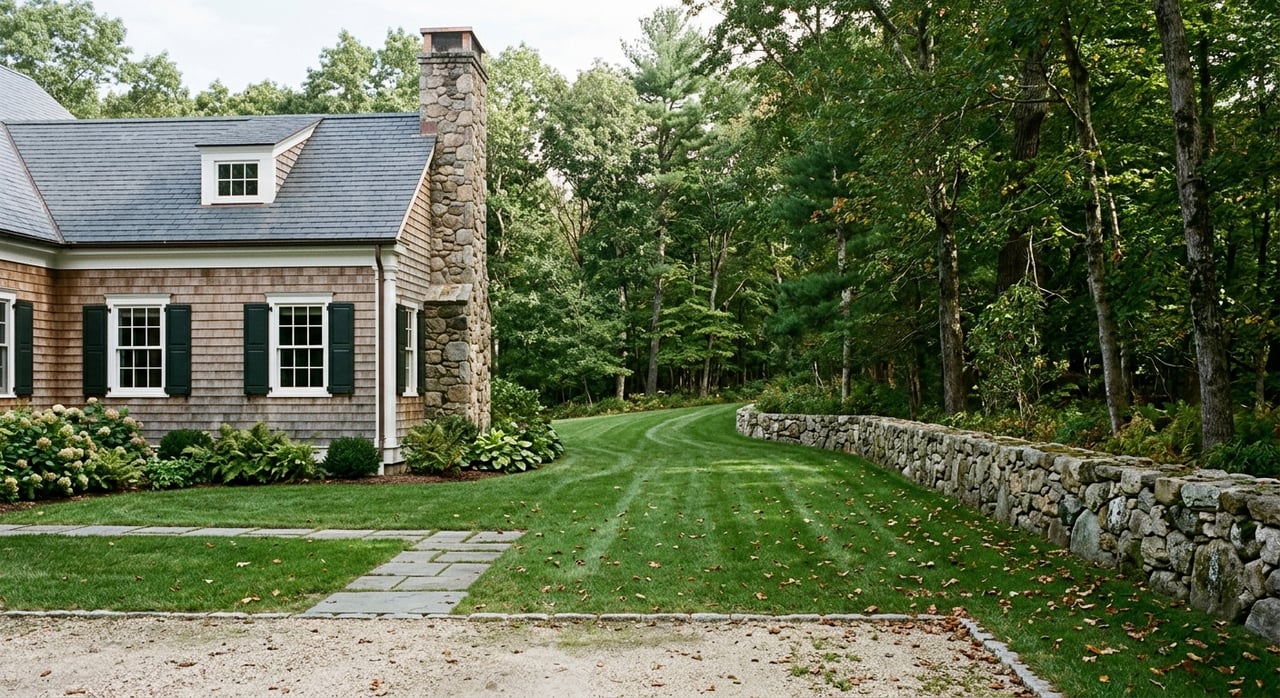
Considering Land In Backcountry Greenwich? What To Know
April 2, 2026
April 2, 2026
If you are considering land in Backcountry Greenwich, the biggest mistake is assuming that acreage alone tells you what you can build. A parcel may look generous on paper, yet zoning, wetlands, access, utility setup, and grading can all shape what is actually possible. The good news is that with the right due diligence, you can separate a beautiful piece of land from a truly usable one. Let’s dive in.
Backcountry Greenwich often appeals to buyers who want privacy, space, and a natural setting. But in this part of town, land value is highly parcel-specific.
According to Greenwich’s Open Space resources, the town views land preservation as a long-term priority and identifies many parcels that meet desirable open-space criteria. That means your review should go beyond a broad area label and focus on the exact parcel, its constraints, and the approvals it may require.
The town also maintains Planning and Zoning resources, including the official map and application oversight through the Planning and Zoning Commission. In practical terms, boundaries, easements, and overlay conditions can matter just as much as lot size.
Before you get attached to a site plan or house concept, confirm the zoning district. In Greenwich’s 2023 Building Zone Regulations, RA-4 single-family lots require 4 acres, while RA-2 single-family lots require 2 acres.
That said, acreage is only the beginning. Under the same Building Zone Regulations, RA-4 has an 84% green-area requirement and RA-2 has a 78% green-area requirement, along with frontage, yard, and lot-shape standards. A lot may meet the acreage minimum and still face meaningful design limitations.
This is one of the most important points for land buyers to understand. A large parcel can still be affected by irregular lot lines, narrow frontage, conservation-related restrictions, or other site conditions.
That is why zoning should be reviewed together with the official map, the survey, and any recorded easements or restrictions. The parcel may support your plans, but you want to know that before you commit, not after.
Environmental review is especially important in backcountry settings. Wooded land, sloped topography, and watercourse areas can all affect where and how you build.
Greenwich’s Inland Wetlands and Watercourses Agency reviews development proposed within and adjacent to inland wetland and watercourse areas. The town’s Engineering Division also issues permits for excavation, filling, removal, and grading, which can become a major factor on estate-style sites.
If a parcel involves wetlands review or extensive grading, your approvals may take more time and your improvement costs may change. That does not mean the property is not worth pursuing. It simply means you should evaluate the site with realistic expectations.
For many buyers, the right question is not, “Can I build something here?” It is, “Can I build what I want here, within my timing and budget?”
Access is another area where buyers should be careful. In backcountry Greenwich, a long driveway or private-feeling entrance may look appealing, but you still need to confirm that access works under town requirements.
Greenwich’s Highway Permit process covers work in the town right-of-way, including installing or relocating a driveway, curb, or sidewalk. The town notes that submissions can require site plans, drainage summaries, and a traffic-control plan.
The town also states that a street-number application should be accompanied by a plot plan or survey showing the building and driveway location. That is a useful reminder that driveway layout, visibility, and emergency access should be part of your early review, ideally before or during the offer stage.
Backcountry Greenwich is not one uniform pocket when it comes to access. Travel time to town amenities, parkways, or other destinations can vary by property.
The safest approach is to verify routes and timing from the exact address you are considering, rather than relying on broad assumptions about the area.
Utility questions can have a big impact on both cost and design. Greenwich notes on its Utilities page that the town’s utilities are privately owned and that water service is provided by Aquarion.
The same town resources also allow property searches for septic systems, wells, and violations. If a residence is on septic, Greenwich notes that a 100% replacement area and soil testing may be required before plans are submitted.
Before a certificate of occupancy is issued, the Health Department must approve buildings served by a well or discharging into a private septic system. That means utility status is not just a background detail. It can directly affect planning, approvals, and future use.
Greenwich also offers resource mapping tools, including zoning and sewer boundary information, through its water and conservation resources. If you are envisioning a new build, expansion, pool, or extensive landscaping, this is one of the first areas to confirm.
Raw land often invites big ideas. You may picture a custom home, guest space, pool, terraces, or expanded outdoor living. Those ideas can be achievable, but they usually involve more than one review step.
Greenwich’s Building Permits resources explain that Building Inspection enforces the Connecticut State Building Code and performs inspections at critical stages of construction. For occupancy, the town’s Certificate of Occupancy process requires sign-off from the relevant departments before final approval.
The town’s process points toward early coordination. Greenwich’s street-number application requirements call for a survey or plot plan, and town records access may involve scheduled appointments for attorneys and title searchers.
In practice, that is why buyers often involve a surveyor, attorney, and site or inspection professionals early. Even if you are only evaluating land, a coordinated review can help you avoid expensive surprises.
Backcountry Greenwich is not only about privacy. For many buyers, part of the appeal is proximity to preserved land and outdoor recreation.
Greenwich’s tourism and cultural assets list includes Babcock Preserve, a 300-acre preserve with 7 miles of trails on North Street north of the Merritt Parkway. The same source also highlights Mianus River & Natural Park and Pomerance/Tuchman Park, both meaningful trail and natural-space assets in town.
Access to preserved open space can be a real quality-of-life benefit. For some buyers, that setting is just as important as the dimensions of the property itself.
Private clubs are another amenity layer, though they should be viewed carefully. For example, Greenwich Country Club identifies itself as a private, invitation-only club, and club access or membership is not part of a real estate deed.
If you are serious about a parcel, these are the key questions to answer before making an offer or during contingency planning:
The strongest land opportunities in Backcountry Greenwich are usually the ones that clear these reviews while still delivering the privacy, setting, and lifestyle you want.
When you buy land in Backcountry Greenwich, you are not only buying acreage. You are buying a package of rights, constraints, costs, and possibilities.
That is why a disciplined review process matters so much. If you understand the parcel’s zoning, environmental conditions, access, and utility path before you move forward, you put yourself in a much stronger position to make a confident decision.
If you are exploring land or estate-style opportunities in Greenwich and want a thoughtful, parcel-specific approach, Brid Mortamais offers discreet, hands-on guidance tailored to your goals.
Stay up to date on the latest real estate trends.
Brid is a full-time agent with a deep understanding of the local market and provides exceptional service for each of her clients whether they are renting, buying, or selling. She handles every aspect of each real estate transaction, guaranteeing her buyers and sellers the highest level of honesty, attention, and discretion.